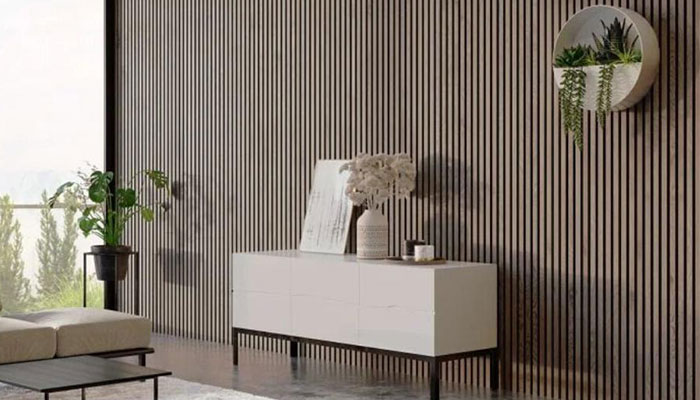
A simple guide of installation PVC wall panels
PVC wall panels are a great option if you want to improve your home at a lower cost. You can use them to update your kitchen countertops, put down a new backsplash, or give your entire bathroom a makeover.
One of the best things about PVC wall panels is how easy they are to make and install. This practical guide will detail everything you need to know about the fabrication process and make the installation process much easier.
Table of Contents
Preparation
As with any do-it-yourself project, you need to make sure that you have taken the correct measurements of the room before purchasing the materials and starting to install your new PVC wall panels. First, find out how long and wide the room in which you want to install the wall panels is. For kitchen splashbacks, you will only need to install a thin strip of PVC paneling. Shower screen panels, on the other hand, usually have to be laid from floor to ceiling.
To find out how many PVC panels you need for a splashback wall, simply divide the width of the room by the width of one panel. Let’s say the wall is 2000 mm wide and each panel is 200 mm thick. To cover this wall, you would need exactly 10 PVC wall panels (2000/200=10).
If you want to install PVC wall panels for an entire bathroom or interior wall, you will need to repeat the above steps depending on the height. Then calculate how many planks you will need to cover the entire area. For best results, you should purchase additional PVC profile edging to keep the edges of the PVC wall panels neat.
Don’t worry if your room can’t accommodate the exact number of PVC wall panels. They are easy to cut with standard carpentry tools.
There are three main types of PVC wall panels in use today, each installed in a slightly different way.

PVC Splashbacks
PVC splashback panels are the easiest to install because they don’t have any seams or holes. Simply glue the panel in place.
- Start by placing the PVC corner molding on the left edge of the wall you want to cover. You can easily cut these strips with a knife or hacksaw.
- Then, secure each panel to the wall with glue or fasteners, making sure they are all properly aligned. If needed, you can use a level.
- Apply a coat of glue to the back of the PVC panels and a few dots of glue in the center for the best fit.
- Masking tape can be used to hold the PVC wall panels in place for at least 24 hours while they dry. Use a long piece of tape along the edge where the panels meet, making sure the panels are aligned.
- Repeat the process with a second profile on the right side of the splashback and you’re done!
- If the PVC splashbacks meet at the corners, you will need to use PVC corner strips. Once these corner strips are glued on, the PVC wall panels can be slid onto the ends of the opening.

Interlocking PVC wall panels
These PVC wall panels are joined together by a locking structure so that there are no joints between them, unlike most splashbacks. This means that installing interlocking PVC wall panels on a wall can make it look more like a single unit rather than multiple planks.
- To install, glue, or fasten the first profile edge strip to the wall.
- Next, secure the PVC wall tiles in place using the same design as before.
- Just remember to match the different sections together and tuck in the parts that fit together. Then use glue or other fasteners to hold them in place.
PVC Wall Panel with Tongue and Groove
The most difficult of the three methods of installing PVC wall panels is the tongue and groove method, which requires that the opposite edges of the panels be spliced together correctly.
- First, make sure that the PVC wall panels are properly aligned so that the “tongue” of one panel meets the “groove” of the next panel. Then proceed with the same steps as before. These PVC wall panels can be easily snapped and spliced together before fixing.
- This connection will be more secure if screws are drilled where the two PVC wall panels meet. Measure all the screws so that they do not go through the other side of the PVC wall. This will give a clean and smooth finish.

A Simple Guide to Installing PVC Wall Panels
PVC wall panels have many features and can be used in many places. For example, bathrooms with showers, bedrooms, living rooms, and more. Here is a simple guide for installation.
- First, measure the height of the wall from floor to ceiling.
- Then, trim off the inside edges, mark and copy the dimensions with a tape measure.
- When ready to measure, use a multi-tool to scribe the lines.
- Use a drill to cut holes in the end of the PVC wall panels to facilitate the use of expansion screws to secure them. Note that the distance between each expansion screw is 300 mm.
- Measure the distance from the floor to the ceiling and mark the measurement on the panel.
- Use a straightedge to mark the width of the line when you need to cut the panel.
- Then, carefully cut the PVC panel with a thin hand saw.
- Next, trim the narrow edges of the first panel with a suitable tool so that it fits correctly to the wall.
- Apply silicone evenly to the back of the panel. Or, if your wall is not flat, apply a small dot of glue on each side of the panel.
- Once you’ve glued the panel to the wall, it’s time to slide it into the trim of your room or doorway.
- Next, use a drill to attach countersunk screws to the panel.
- Repeat this along the wall. But don’t cut all the way through the tongue and groove portion of the last panel. Finally, install the side or end caps on the inside of the wall.
- Once the PVC wall panels are in place, leave a 5mm distance on the wall edge for decoration.

Cutouts for PVC panels
To allow electrical plugs, light switches, and other things to protrude out of the wall, it may be necessary to cut holes in the PVC wall panel.
- First, locate the position of the switch or plug on the wall.
- Align it with the PVC siding and draw a line around the location of the plug.
- Use a Stanley knife or other tool to cut along the line and remove the excess PVC wall plate.
- Before gluing the altered PVC panel to the wall, apply more glue around the edges of the holes to prevent it from warping.
Frequently Asked Questions about PVC Wall Panels
Can I Use PVC Wall Panels in My Home?
Kitchens are usually made of wood and bricks, but PVC wall paneling is the best choice for kitchens. It is easy to clean and does not require much maintenance. Water doesn’t stick to PVC wall paneling, so it won’t get damaged even if it gets wet.
The most popular and sought after kitchen layouts are made of PVC wall panels put together in modules. The durability and heat resistance of these wall panels makes them more popular. Installing PVC wall panels in your kitchen is very simple. You can also use them to cover cabinets, shelves, and sinks.

Are PVC Panels Strong?
PVC wall panels are often used to cover ceilings in homes and businesses. It is a decorative material that has high strength and low weight. Manufacturers make it into ceilings or wall panels in a variety of shapes, sizes, colors, and designs.
These PVC wall panels are hollow in the center and smooth and shiny on the outside. Since these panels are waterproof, they can be used in place of standard mineral fiber ceilings such as POF or gypsum in wet areas such as bathrooms, basements, and balconies.
PVC wallboard can last a long time and is very strong. It can be used for many years without twisting or bending.PVC wallboard is not as fragile as gypsum or POP, so it is less likely to break when handled.
Is PVC Wallboard Less Expensive than Ceramic Tile?
The price of PVC wall panels is usually lower than the price of ceramic tiles. PVC wall panels are made of plastic and are very inexpensive, especially when compared to ceramic tiles. This makes them a low-cost option for wall paneling. Since PVC wall panels are very sturdy, you can use these wall panels for many years.
Related Post
Share

Latest blog

Do I Need to Cover the Entire Wall with Acoustic Panels?
April 8, 2025


The Basics of Acoustic Panels for an Auditorium
April 2, 2025